A remote that redraws itself
The remote in your hand has no idea what is on the television. That has been true since 1950, and it is the reason a modern screen, capable of anything, is still driven like a cable box.
Volume, channel, an arrow pad, a home button. The remote assumes there is a grid of channels and a menu to climb. Neither is true of a screen that is, at this moment, running a quiz, and in ten minutes will be a channel wall, and after that a game with a scoreboard. The screen has evolved. The thing you point at it has not.
The pad says what the scene means
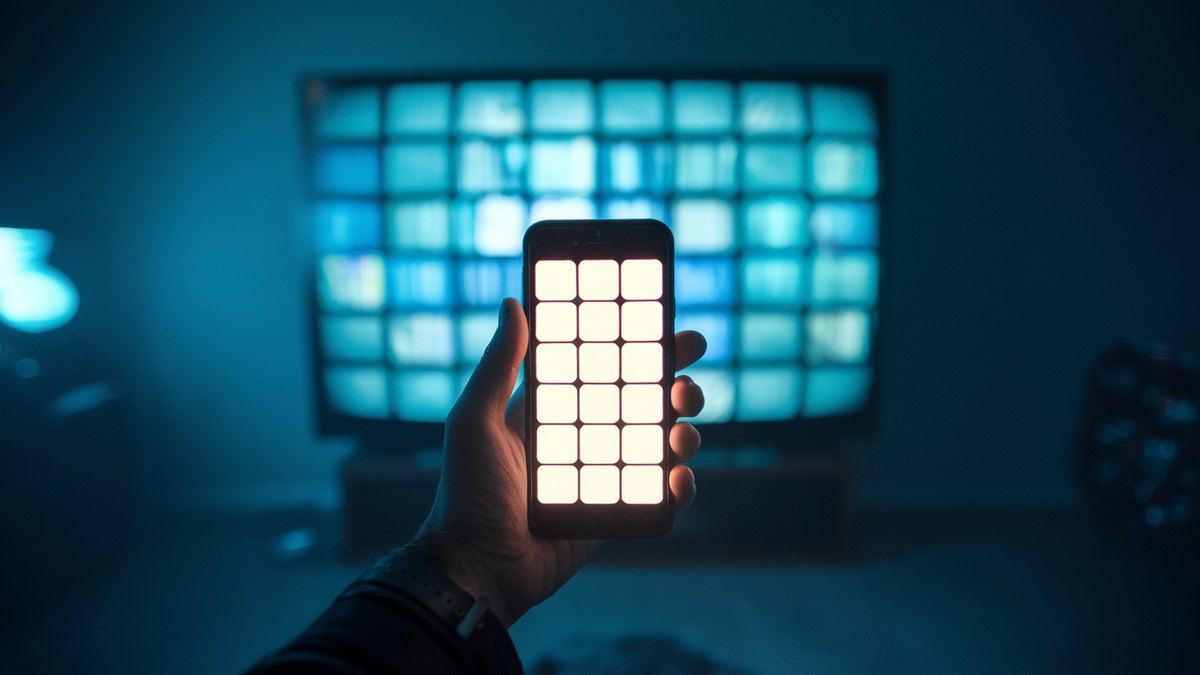
The OlloVue remote, on your phone or the hardware one, starts by asking the hub what this screen is showing. Then it draws that. On the game lobby, up and down walk tonight's games, left and right the leagues, OK enters one, and the slate is mirrored under your thumb with the lit row. On a channel wall, the remote is the wall: a grid of the channels' own marks, tap one and the television goes there. On trivia night, OK is Reveal, and the key the quiz does not use is dimmed and the one it does is named, because that is what a host reaches for.
This is only possible because a scene here is a page that knows what it is. It says I have a next question, a reveal, a skip, and the hub passes that to whatever is holding the remote. A new scene brings its own controls with it. Nobody updates the remote.
The guest's copy
Scan the corner of the wall and you get a version of the remote with no arrows, because the wall is the house's. A guest can cheer with their name on it, keep a channel on their own shelf, or ask for a game rather than press for one. The bar sees who is asking, and the tally, and puts it on in one tap. Three asks and it is a person; a request nobody grants is gone in fifteen minutes.
Why this is the platform, not the accessory
A remote that knows what is on is the interface between a person and a television. Once that exists, a scene is something anyone can build for both the screen and the remote at once: a sports company, a broadcaster, a creator, a venue. The hardware is the least of it. What it opens is a screen that can be handed to whoever is standing in front of it, and behaves.
← All notes