Your menu board should read from your register
Almost every digital menu board in the world is a picture of a menu. Someone made it once, in a design tool, and now it hangs on the wall slowly going out of date.
You can tell which restaurants have one, because they have all developed the same habit: a strip of tape over a price, or a server saying "ignore the board, that's changed." The screen cost real money and the room has quietly learned not to believe it.
The problem isn't the hardware and it isn't the design. It's that the board has no idea what the restaurant is doing. It's a photograph of a decision made three months ago.
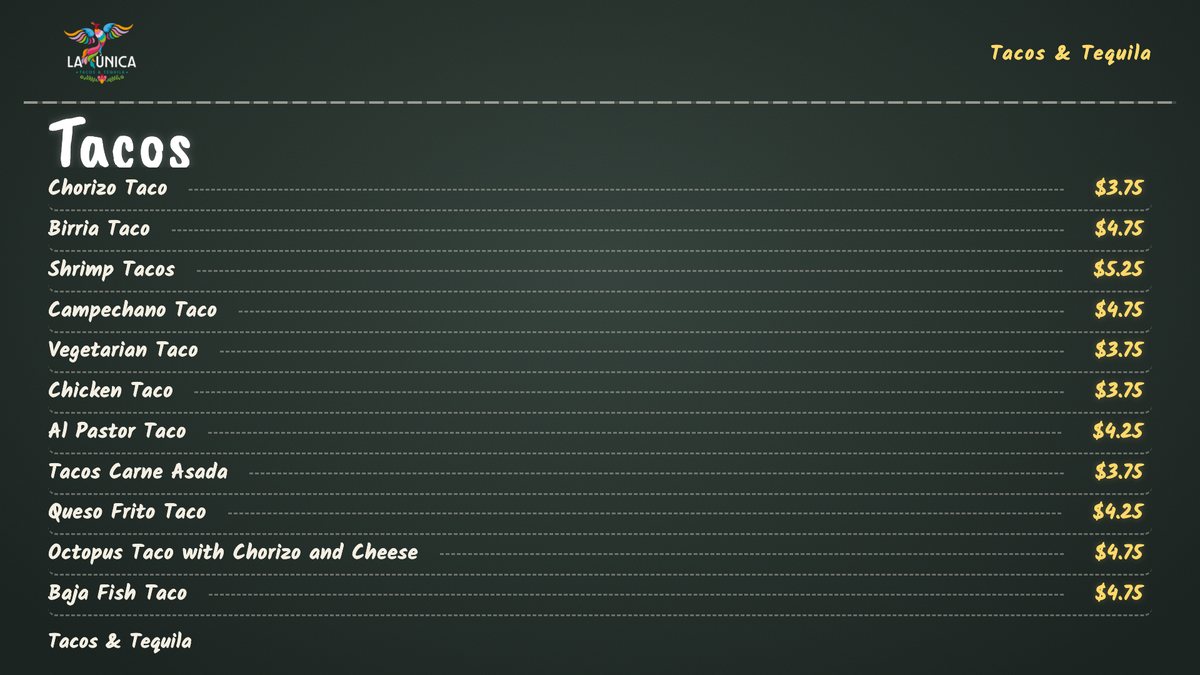
Two prices for the same taco
The moment a price lives in two places, it lives at two prices. Your point-of-sale knows what a taco costs, because that's what it charges. The board knows what a taco cost on the day someone typed it in.
Every price change now needs a second action by a second person in a second tool — and that action is the one that gets skipped, because the restaurant already got paid correctly. The register is self-correcting. The board is not.
This is not a hard problem, technically. It's a design decision most signage products can't make, because they aren't the point-of-sale and never see the till. They sell you a canvas. What you needed was a window.
The sold-out problem is worse
Prices go stale slowly. Availability goes stale in the middle of service.
The kitchen runs out of carnitas at 7:40 on a Friday. What happens next in most restaurants: the kitchen tells the servers, the servers tell the tables, and the sixty-inch screen above everyone's head keeps advertising carnitas — with a photograph — for the rest of the night.
So the screen actively generates work. Every guest who reads it and orders carnitas creates a small apology, a re-order, and a slightly worse night. The most prominent surface in the room is misinforming people faster than the staff can correct it.
When the board reads live availability, the dish leaves every screen in the building the moment it's marked out — and comes back on its own when it's back. Nobody edits anything. Nobody remembers to.
Happy hour is the test case
Scheduled pricing is where the difference stops being philosophical.
Happy hour means every drink price in the building changes at 3pm and changes back at 6pm, four or five days a week. On a hand-maintained board that is roughly forty edits a week, at exactly the hour the venue is least able to spare someone.
So most places don't do it on the screens at all. They print a card for the tables and let the boards keep showing full price — which means the screen is now contradicting the offer you're running.
The way to build this correctly is to never change the stored price at all. A rule says "house margaritas are $6 between 3 and 6 on weekdays." The price is computed when someone asks — the register, the ordering site, the board — and it reverts at six because there was never anything to revert. There's no cleanup job to fail at 6:01.
- The board shows the deal, with the old price struck through, because a discount the room can't see doesn't move drinks
- The register charges it, so the offer and the till agree
- At six, everything is simply itself again
What this actually buys you
Not "automation." The point isn't saving the four minutes it takes to edit a slide.
The point is that the screen becomes trustworthy. Once a board has been right for a month, guests start reading it instead of asking, servers stop apologising for it, and you can put something on it that matters — a special, an event, a price — and know the room will actually believe it.
That trust is the whole asset. Everything else a screen can do is downstream of whether people believe what's on it.
← All notes