The most wasted asset in your building is above the bar
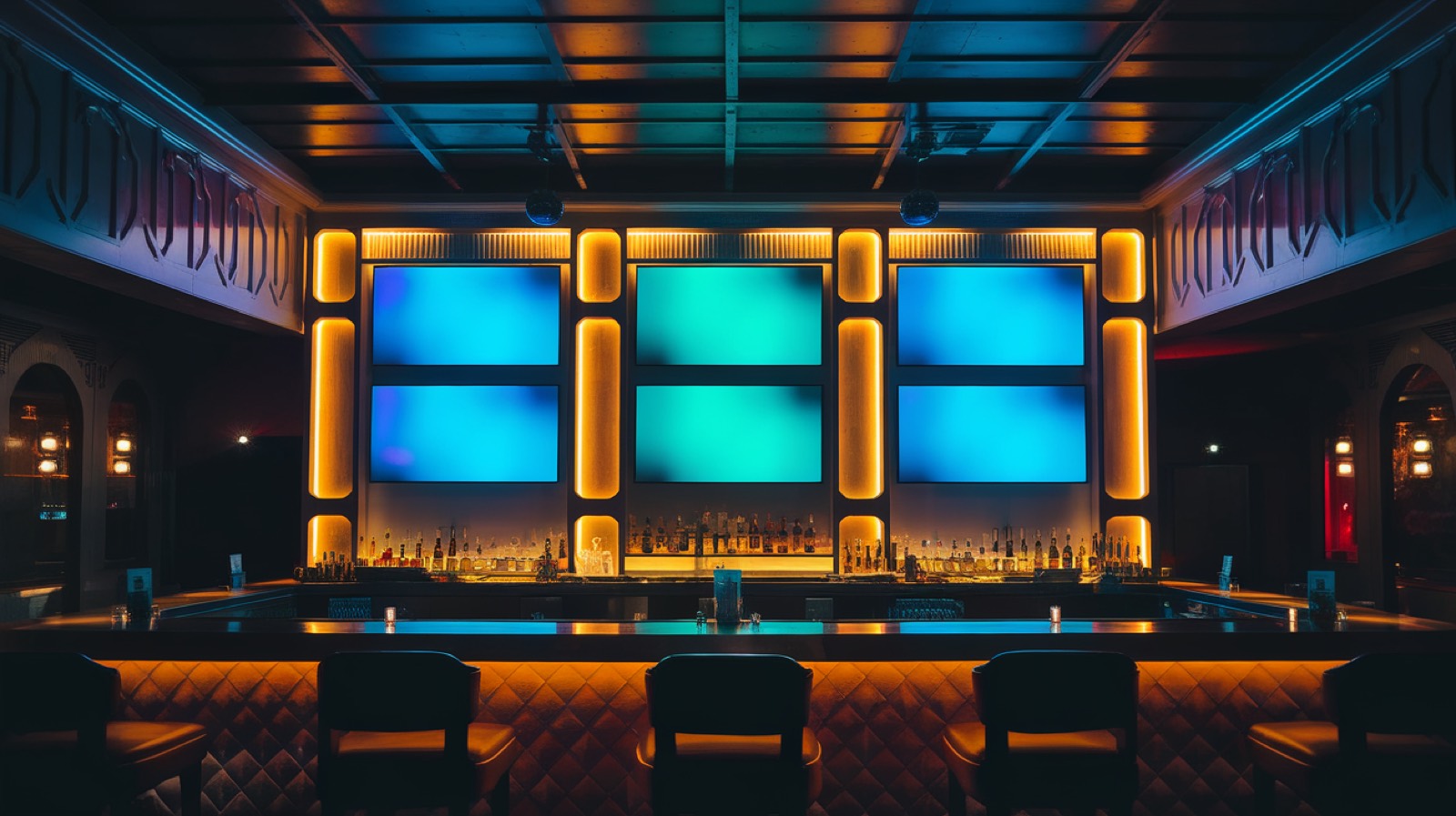
A restaurant with four screens is running four advertising placements in front of a captive, local, high-intent audience — and almost always selling zero of them.
Think about what those screens actually are. People sit under them for forty-five minutes to two hours. They're local. They're spending money right now, which means they have money. They're relaxed and mildly bored, which is the state every advertiser on earth is trying to buy.
The dentist two doors down is paying Meta to reach roughly these people, badly, on a phone, while they scroll past. You have them in a chair, looking up.
Why nobody sells it
Not because the idea is unknown. Because the work is unbearable.
To sell a slot on your TVs, historically, you had to agree a price with the neighbour, collect a design from them, get it onto a USB stick or into some CMS, remember to take it down when the month ended, chase the invoice, and then have no answer at all when they asked the only question that matters: did it work?
That's an hour a month of annoying admin per advertiser, for maybe $100. Nobody does it twice.
The three things that make it work
The whole thing turns on removing the manual labour, not on charging more.
- They buy it themselves. A page they can reach, a package they pick, a card they enter. You approve or decline. You're not negotiating, you're moderating.
- It runs and stops on its own. The slot rotates into the loop, evenly paced so it isn't three in a row, and it stops the day the campaign ends. Nothing to remember, nothing to take down.
- It reports. This is the one that matters most, and we'll come back to it.
Once those three are true, the marginal cost of the fourth advertiser is roughly zero. That's what turns a favour for a neighbour into a line of revenue.
Count scans, not "impressions"
Every screen-advertising pitch in history has been sold on impressions: this many people saw it. It's a number nobody can verify and everyone quietly discounts.
You can do something much better, because a TV in a room is the one screen where you can put a QR code and know that anyone who scanned it was physically present in your building.
A scan is not an estimate. It's a person, in the room, who was interested enough to lift a phone. When you hand the barber a report at the end of the month, "your slot was scanned 43 times by people sitting in a restaurant on your street" is a fundamentally different conversation from "approximately 4,000 impressions."
One gets discounted. The other gets renewed — and it's the honest number, which is why it survives contact with a sceptical buyer.
Who actually buys
Not brands. Neighbours.
The businesses that convert are the ones whose customers are already your customers, walking the same street: the barber, the nail salon, the gym, the auto shop, the realtor, the dentist, the guy who does phone repair. Local service businesses spend real money on advertising and get very little that's measurable for it.
They also don't need a media plan. They need to be seen by people who live within a mile, and they'd rather give that money to a neighbour than to a platform.
The quiet part
If a handful of local businesses each take a slot, your screens stop being a cost line.
The hardware, the subscription, the whole system pays for itself out of inventory you already owned and were giving away for free — while still doing its actual job, which is showing your menu and your specials to your own guests.
That's the argument. Not "digital signage is engaging." You have inventory. Sell some of it.
← All notes